
This is what we know so far about the tragic collision between an Air Canada Express aircraft and a fire truck in New York’s LaGuardia Airport. The accident happened in the evening hours of Sunday, the 22nd of March, local time.
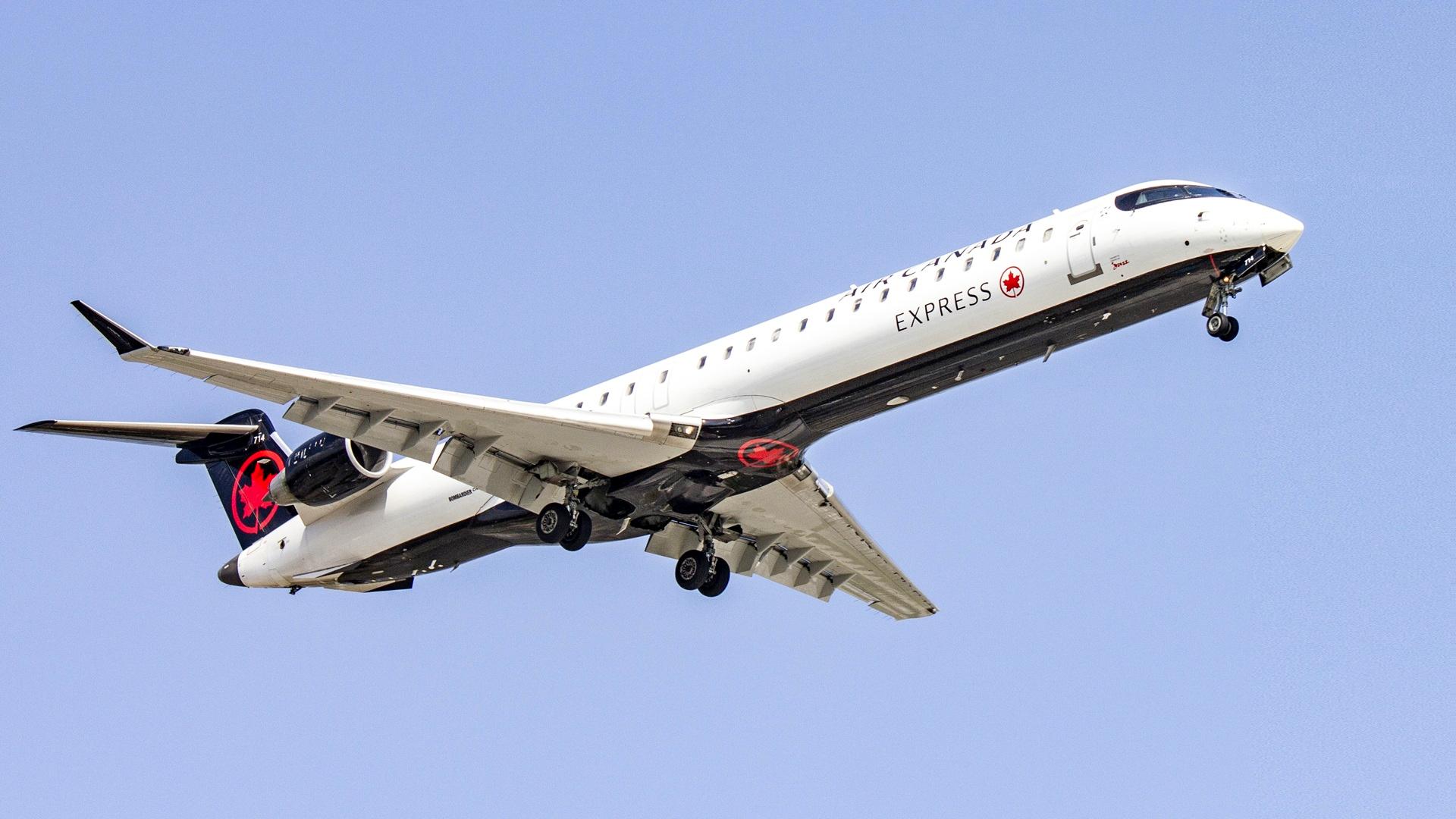
This was Air Canada Express (Jazz) flight 8646, from Montreal in Canada, to LaGuardia Airport. The airline performs this service daily, on behalf of Air Canada. On this occasion, it involved a 76-seat, 20-year-old CRJ-900LR, with registration C-GNJZ. There were 72 passengers and 4 crew on board.
The aircraft was on approach to runway 4 in LaGuardia, when an airport fire truck reportedly requested to cross the same runway, on taxiway D.
The crew of this fire truck was responding to a separate incident, involving a departing United Airlines flight, which had rejected its takeoff, at a ground speed of around 95 knots, and was sitting on a taxiway, waiting for a gate to open.
The crew of that aircraft had reported “an issue with an odor” and declared an emergency after a number of cabin crew towards the rear of that aircraft (737 MAX-8, reg. N17300) began to feel ill.
The fire truck was headed for that scene, just in case the crew of that aircraft decided to evacuate on a taxiway, or disembark there using airstairs. The fire truck had to cross runway 4 to get there.
It appears that an air traffic controller cleared the truck to cross runway 4 at taxiway D, while the Air Canada Express CRJ-900 was landing. Taxiway D is at the far end of the touchdown zone for runway 4.
A controller then saw the conflict as the Air Canada aircraft touched down and tried to stop the fire truck from entering the runway. Unfortunately, it was too late.
The precise position of the impact between the aircraft and the truck still remains unclear. As a result, there are some conflicting reports on the speed of the aircraft at the time of the crash.
As of this writing, some sources, including Reuters, mention a speed of just 24 miles an hour… which corresponds to the last recorded speed of the aircraft — NOT its speed during the collision.
However, when the CRJ900 crossed taxiway D, that the fire truck was reportedly on, it had a ground speed of approximately 114 knots, or 131 mph, or 211 km/h.
In any case, after the collision, the aircraft came to a stop off the runway, near taxiway E, with the fire truck close to it. This is over 150 metres or 490 feet away from the point where taxiway D crosses runway 4.
The front of the aircraft was severely damaged in the collision. Unfortunately, the two pilots in the CRJ lost their lives. 41 other people were injured. 32 of these people were later released, but 9 remained in hospital with serious injuries.
These 9 people include passengers and crew, as well as the two officers in the fire truck, who have non-life-threatening injuries.
The FAA and the NTSB have already announced that they are sending investigators on the scene.
We will update this story when more information becomes available.


3 comments
grahamj9101
Tragically, a case of human error: but do the procedures (or lack of them) also need to be investigated?
I’m certainly not in a position to apportion blame.
Jon Moore
I gather the first two rows of windows on both sides (at the front) are the galley and the toilet, so I think that if true, that fact may have saved lives. The air hostess in the front was lucky to survive after being thrown clear, still strapped to her seat.
Gordon Wallin
Low time ex-Flying Instructor, got a different career-a real paying job-, still do a little flying.
There seems to be a lot of talk about ATC being understaffed. Due to, you know who.
This is so sad because it seems avoidable. Odd that the ground controller had no radio contact with the emergency vehicle, and the air controller had no radio contact with the pilot. If it’s all the same
person, that’s even more puzzling. Just too bad.